Versatility
Glide and low end. Aggressive in turns.
The most versatile shape in the range — maximum glide and early planing without giving up precision when the wind picks up.
Aeryn Flux Carbon · 2026
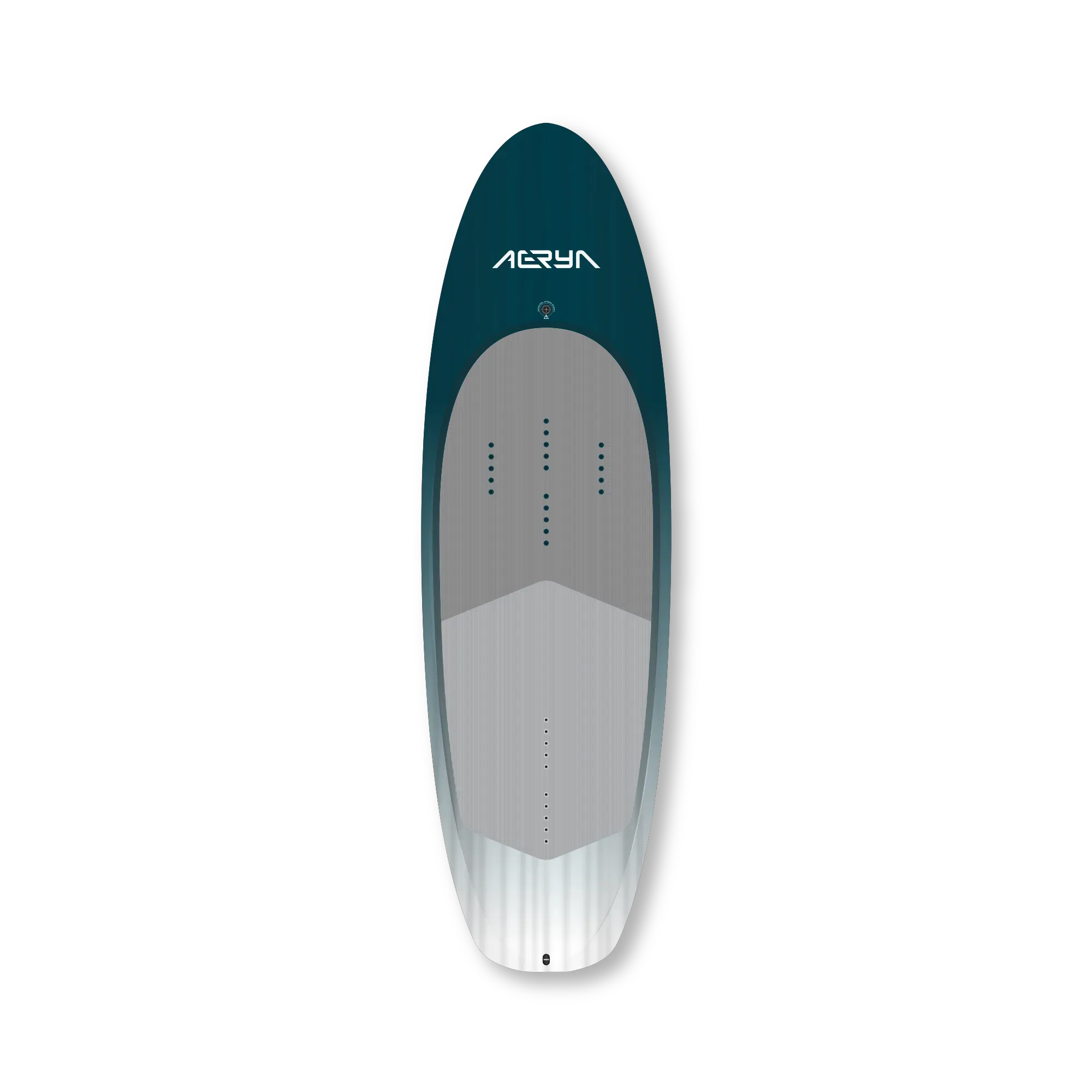
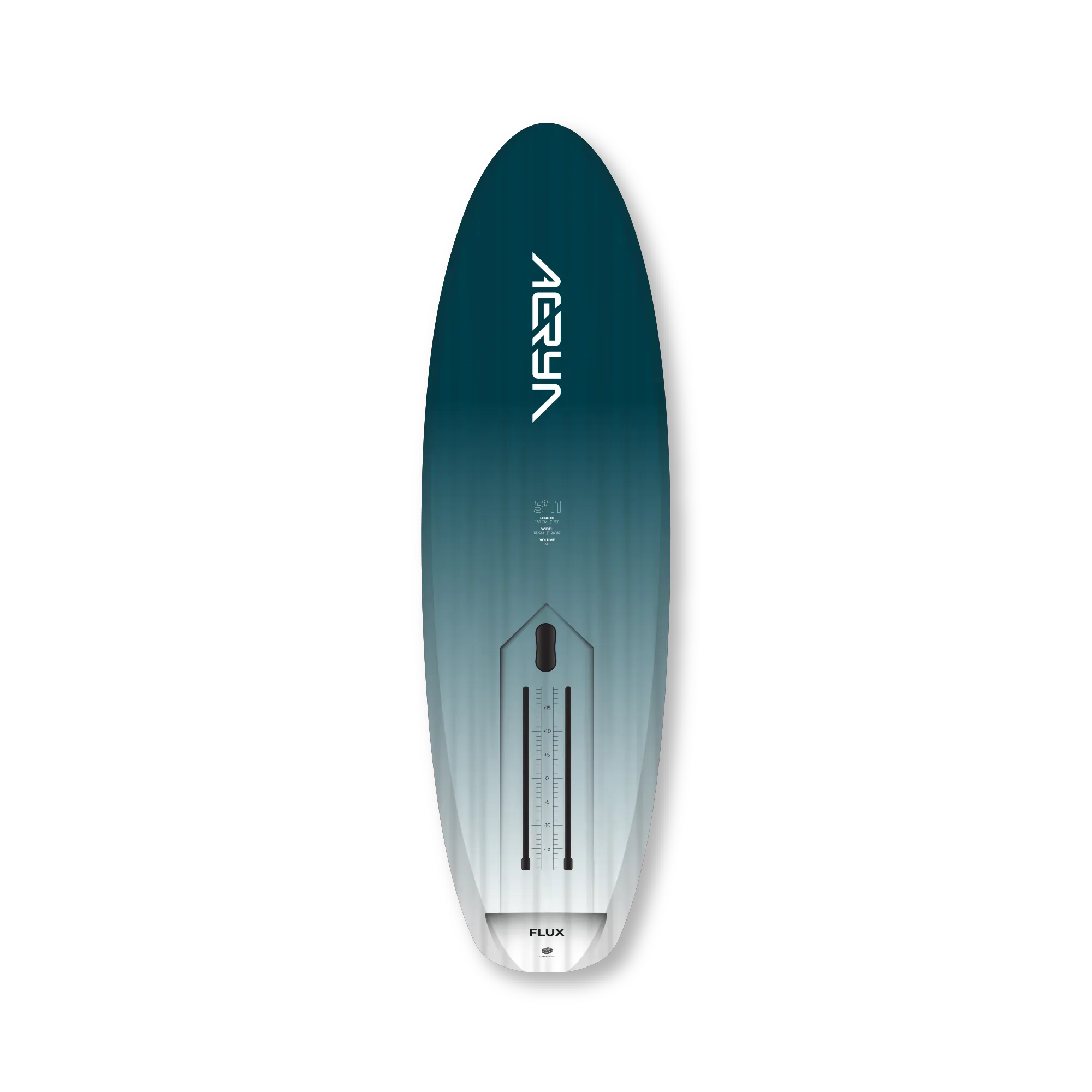
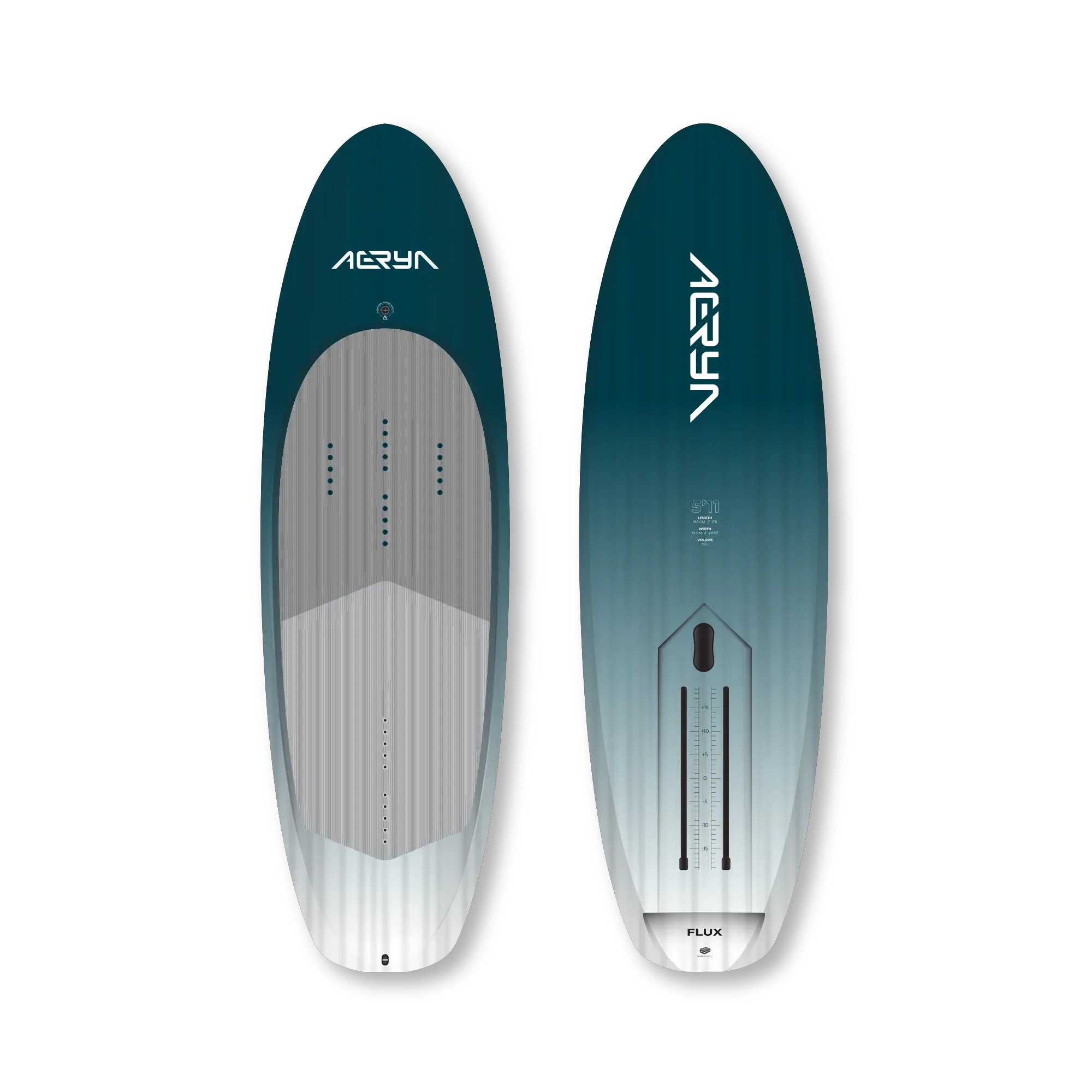
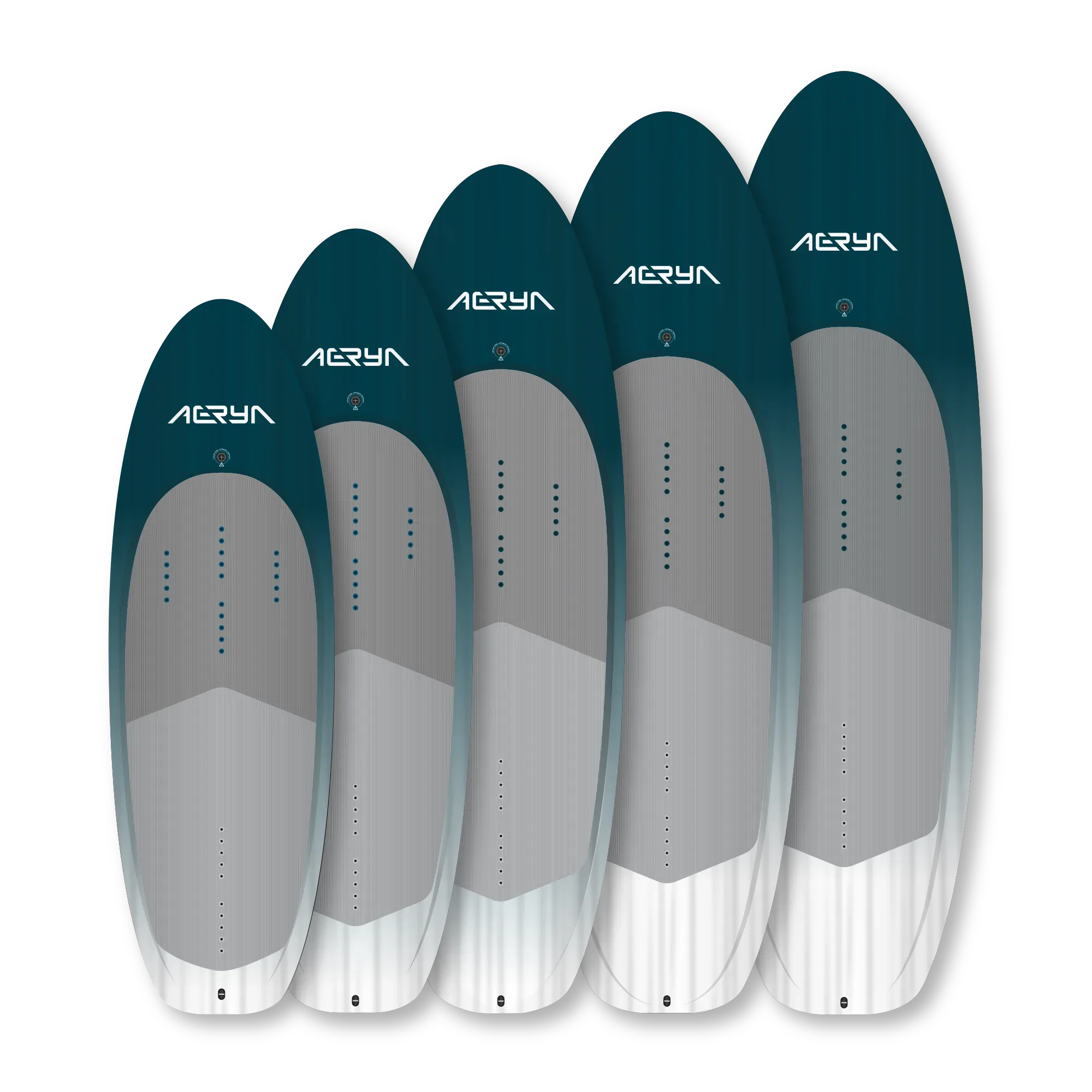
The Flux is the most versatile board in our range. It is dedicated for riders looking for maximum of glide and low end, remaining very aggressive in turns.


 Image 1 of 8
Construction
This size
All sizes
In the box
Find your recommended board volume based on rider weight and skill level.
| Rider Weight | Beginner | Intermediate | Advanced |
|---|---|---|---|
| 50–59 kg | ~95 L | 65–75 L | 55 L min |
| 60–69 kg | ~105 L | 75–85 L | 65 L min |
| 70–79 kg | ~115 L | 85–95 L | 75 L min |
| 80–89 kg | ~125 L | 95–105 L | 85 L min |
| 90–99 kg | ~135 L | 105–115 L | 95 L min |
| 100+ kg | ~145 L | 115–125 L | 105 L min |
Recommendations are a starting point - volume and shape should be tuned to your riding style and conditions.
Versatility
The most versatile shape in the range — maximum glide and early planing without giving up precision when the wind picks up.
Construction
Carbon-Kevlar impact zones, bi-axial carbon stiffness and a scratch-resistant finish — a connected ride that stays light underfoot session after session.
Details

Construction
A sandwich build tuned for stiffness, impact resistance and minimal weight.

Tracks
Fiberglass-reinforced tracks keep foil position locked under load.

Deck
Full coverage grip where you need it — no slipping on hard turns.

Core
Impact-resistant foam core keeps swing weight down for quicker response.

Rails
Strength and stiffness where the board flexes most under your feet.

Range
Four sizes from compact freeride to full-volume glide — match volume to your weight.
Explore the range
Need more maneuverability? The Surge is built for freestyle. Want pure downwind glide? The Flow picks up where the Flux leaves off.
Ride the Difference
Understanding how a hydrofoil board is shaped, built and sized is the key to choosing the right one for your riding.
From rocker to volume, every dimension changes how the board feels on the water and how it works with your foil.
All Aeryn boards use a mid-length design: longer (170–190 cm) and narrower than traditional wing boards. More length = earlier release, better glide, smoother touchdown recovery. A trend proven by downwind SUP foiling, now standard across freeride, freestyle and surf.
A wider board is more stable and easier to balance on while you learn; a narrower board is more agile and easier to pump.
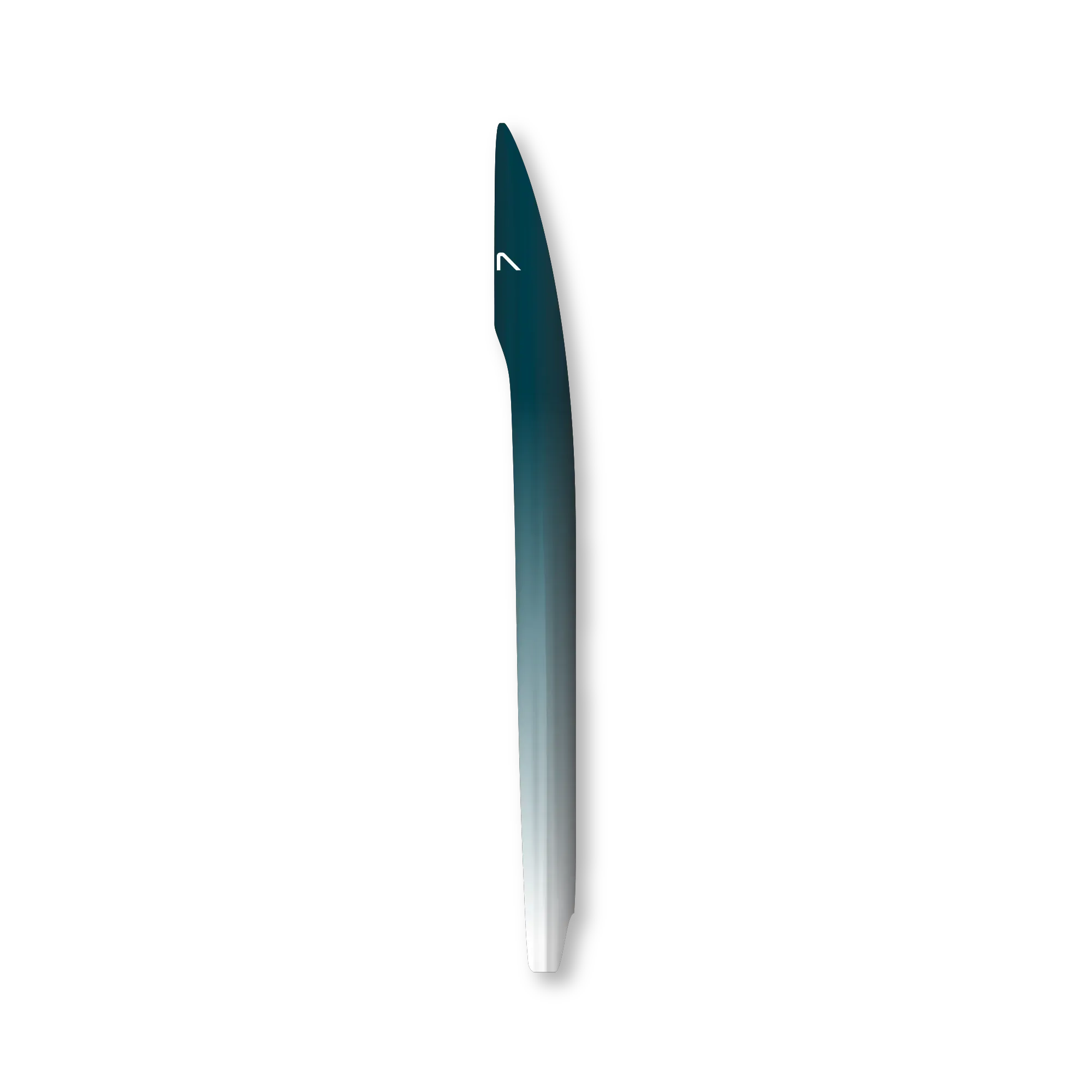
The curve of the board from nose to tail. More rocker helps touch-and-go and reduces nose-pearling; less rocker is faster and smoother.
SURGE Carbon
Shaped for wave riding and surf-style carving.
FLUX
The versatile everyday board for progressing riders.
FLUX Carbon
Lighter and stiffer for better pump and response.
FLOW Carbon
Built for speed, glide and long-distance performance.
FLUX Inflatable
Drop-stitch construction that packs small without giving up stability.
FLOW Inflatable
Race-minded performance in a packable inflatable.
Trainer
Generous volume and width for maximum stability and the easiest first flights.
Lightweight, stiff and highly responsive - the choice for performance and pump.
Durable, portable and beginner-friendly construction.
The standing surface and its grip.
Volume
The board's displacement in litres (L). More volume means more float, stability and easier flight; less means more agility and speed.
Width
The board's beam in centimetres. Wider is more stable; narrower is more agile.
Rocker
The lengthwise curve of the board bottom. More rocker helps touch-and-go and reduces pearling; less rocker is faster.
Concave
A shallow channel in the bottom of the board that improves water flow and stability at take-off.
Cutouts
Scooped rails or notches that reduce the board's footprint in the water and ease release on take-off.
Foil Box
The recessed track that accepts the foil mast and lets you adjust its fore-aft position.
Footstrap Inserts
Threaded sockets in the deck that accept footstraps so you can tune your stance.
EVA Deck
The soft, grippy foam standing surface that cushions your feet and adds control.
The foil glossary
Mast
The vertical piece connecting the board to the fuselage. Determines flight height. Standard: 70 cm (beginner), 75–85 cm (all-around).
Front Wing
The main lift generator. Surface area (cm²) and aspect ratio define take-off ease, speed and glide. MA = entry/freeride, MHA = versatile, HA = glide/downwind.
Fuselage
The horizontal bar linking front wing to stabilizer. Shorter = tighter turns (freestyle). Longer = better tracking (downwind).
Stabilizer
The small stabilizer that balances the foil in flight. Larger = more stability. Smaller = looser, more responsive.
Aspect Ratio
Wingspan² ÷ surface area. Low AR (≤6): compact, maneuverable, forgiving. High AR (≥8.5): fast, efficient glide, better upwind. Medium AR (~7): versatile all-around.
Aluminium & Carbon
Aluminium: affordable, impact-resistant, ideal for learning. Carbon: lighter, stiffer, earlier take-off, more responsive. Best for intermediate+ riders.
Disciplines
Freeride: everyday riding, cruising, progression. Freefly: riding swell with the wing flagged. Wing Surf: waves with the wing in hand. Freestyle: jumps, rotations, tricks. Racing: speed on a course.
Pumping
Leg-driven motion to generate or maintain speed without wind or wing propulsion. Essential for dock starts, connecting waves, and downwind glides.
Jibe & Tack
Jibe: downwind turn, changing direction with the wind at your back. Tack: upwind turn, passing through the wind.
Stall
Loss of lift causing the foil to sink. Happens when speed drops below the foil's minimum flight speed (typically ~5 knots).
Ride the difference
Choose your volume, dial your foil and ride — the Flux Carbon covers freeride, parawing and light downwind in one shape.
AERYN
Personalise your setup